Piles, also known as haemorrhoids, are one of the most common anorectal conditions affecting people of all ages. Despite being highly treatable, many people delay seeking medical care because of embarrassment or the hope that the symptoms will go away on their own. Unfortunately, untreated piles can worsen over time, making treatment more complicated.
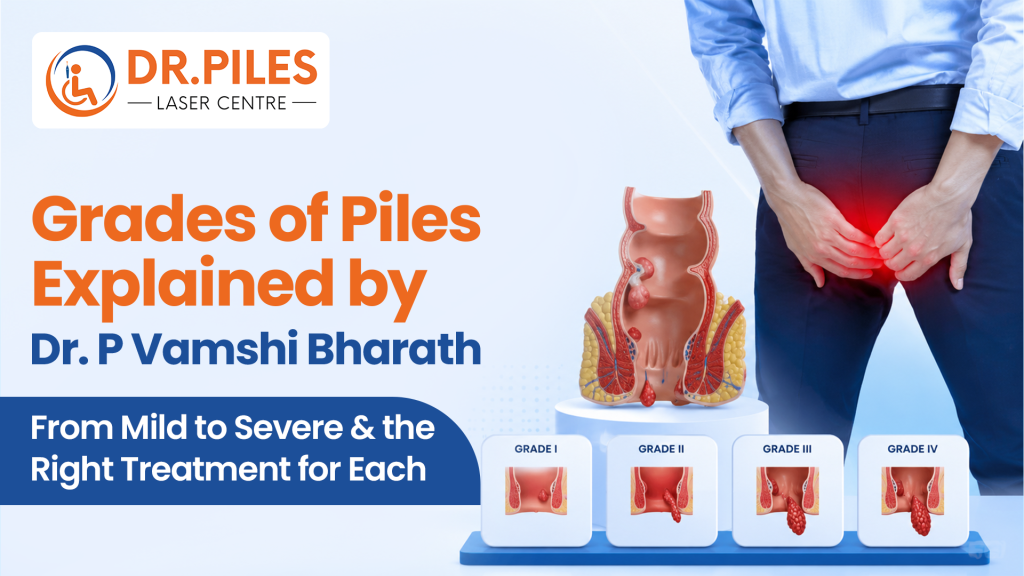
The severity of piles is classified into four grades, ranging from mild internal swelling to permanently prolapsed hemorrhoids. Understanding these grades can help you recognize when it’s time to consult a specialist.
In this blog, Dr. P. Vamshi Bharath, an experienced laparoscopic and laser surgeon, explains the different grades of piles, their symptoms, and the most suitable treatment options for each stage.
Common Causes of Piles
Several lifestyle and health factors contribute to piles, including:
- Chronic constipation
- Frequent straining during bowel movements
- Sitting on the toilet for long periods
- Low-fiber diet
- Pregnancy
- Obesity
- Lack of physical activity
- Heavy weight lifting
- Aging and weakened supporting tissues
Common Symptoms of Piles
Symptoms vary depending on the grade of piles and may include:
- Bright red bleeding after passing stools
- Pain during bowel movements
- Itching around the anus
- Swelling near the anal opening
- Mucus discharge
- Feeling of incomplete bowel evacuation
- A lump near or outside the anus
Understanding the Four Grades of Piles
Grade 1 Piles – Mild Internal Hemorrhoids
Grade 1 piles are the earliest stage and remain completely inside the rectum.
Symptoms
- Occasional bleeding during bowel movements
- Mild discomfort
- No visible lump
- No prolapse
Many people may not even realize they have piles until they notice blood on the toilet paper.
Treatment
Most Grade 1 piles improve with conservative treatment:
- High-fiber diet
- Increased water intake
- Stool softeners (if necessary)
- Regular exercise
- Avoid prolonged sitting on the toilet
- Medications prescribed by your doctor
Early treatment often prevents progression.
Grade 2 Piles – Prolapse That Goes Back on Its Own
Grade 2 piles protrude outside the anus during bowel movements but return inside naturally afterward.
Symptoms
- Bleeding
- Small lump during passing stools
- Mild pain or discomfort
- Itching
- Mucus discharge
Treatment
Treatment usually includes:
- Lifestyle modifications
- Fiber supplements
- Medications
- Office-based procedures such as:
- Rubber band ligation
- Injection sclerotherapy
- Infrared coagulation
If symptoms persist, laser treatment may be recommended.
Grade 3 Piles – Require Manual Reduction
At this stage, the piles come out during bowel movements and do not go back inside on their own. They must be pushed back manually.
Symptoms
- Larger prolapsing lump
- Frequent bleeding
- Pain
- Swelling
- Difficulty maintaining hygiene
- Discomfort while sitting
Treatment
Conservative treatment alone is usually insufficient.
Recommended options include:
- Laser piles surgery
- Stapler hemorrhoid surgery (in selected cases)
- Surgical hemorrhoidectomy when required
Laser surgery is often preferred because it offers:
- Less pain
- Minimal bleeding
- Faster recovery
- Early return to work
Grade 4 Piles – Permanently Prolapsed
Grade 4 piles remain outside the anus all the time and cannot be pushed back.
Symptoms
- Constant swelling
- Severe pain
- Continuous discomfort
- Bleeding
- Difficulty sitting
- Difficulty maintaining hygiene
- Risk of thrombosis or infection
This stage significantly affects quality of life.
Treatment
Grade 4 piles generally require surgery.
Depending on the patient’s condition, treatment may involve:
- Laser hemorrhoid surgery
- Conventional hemorrhoidectomy
- Combined surgical procedures for advanced cases
Timely surgery prevents complications and provides long-term relief.
Quick Comparison of Piles Grades
| Grade | Prolapse | Bleeding | Pain | Typical Treatment |
| Grade 1 | No | Mild | Minimal | Diet, medicines, lifestyle changes |
| Grade 2 | Comes out and returns automatically | Common | Mild | Medicines, office procedures, laser if needed |
| Grade 3 | Comes out and needs manual pushing back | Frequent | Moderate | Laser surgery or surgical treatment |
| Grade 4 | Permanently outside | May be severe | Severe | Laser surgery or hemorrhoidectomy |
Can Piles Be Prevented?
Yes. Healthy lifestyle habits can greatly reduce your risk.
Prevention Tips
- Eat plenty of fruits and vegetables
- Include whole grains in your diet
- Drink 2–3 liters of water daily
- Exercise regularly
- Avoid straining during bowel movements
- Do not delay passing stools
- Limit prolonged sitting
- Maintain a healthy weight
These habits also reduce the chances of recurrence after treatment.
Why Choose Laser Treatment for Piles?
Modern laser technology has transformed piles treatment.
Benefits include:
- Minimally invasive procedure
- Less postoperative pain
- Minimal bleeding
- No large surgical wound
- Faster healing
- Short hospital stay
- Quick return to daily activities
- Lower risk of complications in suitable patients
Not every patient requires laser treatment, but it is an excellent option for many Grade 2, Grade 3, and selected Grade 4 piles after evaluation by a specialist.
Frequently Asked Questions (FAQs)
1. Which grade of piles is the most serious?
Grade 4 piles are the most severe because they remain permanently outside the anus, causing persistent pain, swelling, and a higher risk of complications.
2. Can Grade 1 piles heal without surgery?
Yes. Grade 1 piles usually improve with a high-fiber diet, adequate hydration, lifestyle changes, and medications prescribed by a doctor.
3. Is laser surgery suitable for all grades of piles?
Laser treatment is commonly recommended for Grade 2, Grade 3, and selected Grade 4 piles. The choice depends on the patient’s symptoms and clinical evaluation.
4. How do I know what grade of piles I have?
Only a colorectal or general surgeon can accurately determine the grade through a physical examination and, if needed, additional diagnostic tests.
5. Can piles return after treatment?
Yes, recurrence is possible if constipation, straining, or unhealthy bowel habits continue. Maintaining a fiber-rich diet, staying hydrated, and exercising regularly can help reduce the risk.
6. Is bleeding during bowel movements always caused by piles?
No. While piles are a common cause, rectal bleeding can also be a sign of other conditions such as anal fissures, polyps, inflammatory bowel disease, or colorectal cancer. Any persistent or unexplained bleeding should be evaluated by a doctor.
Choose the Right Treatment for Every Grade of Piles
Piles are a progressive condition, but they don’t have to disrupt your life. Knowing the difference between Grade 1, Grade 2, Grade 3, and Grade 4 piles helps you seek treatment before symptoms become severe. While mild cases often improve with dietary changes and medications, advanced grades may require minimally invasive laser surgery or other surgical treatments.
If you’re experiencing bleeding, pain, or a prolapsing lump, don’t delay consultation. Dr. P. Vamshi Bharath can accurately diagnose the grade of your piles and recommend the most effective treatment to help you recover comfortably and prevent future complications.