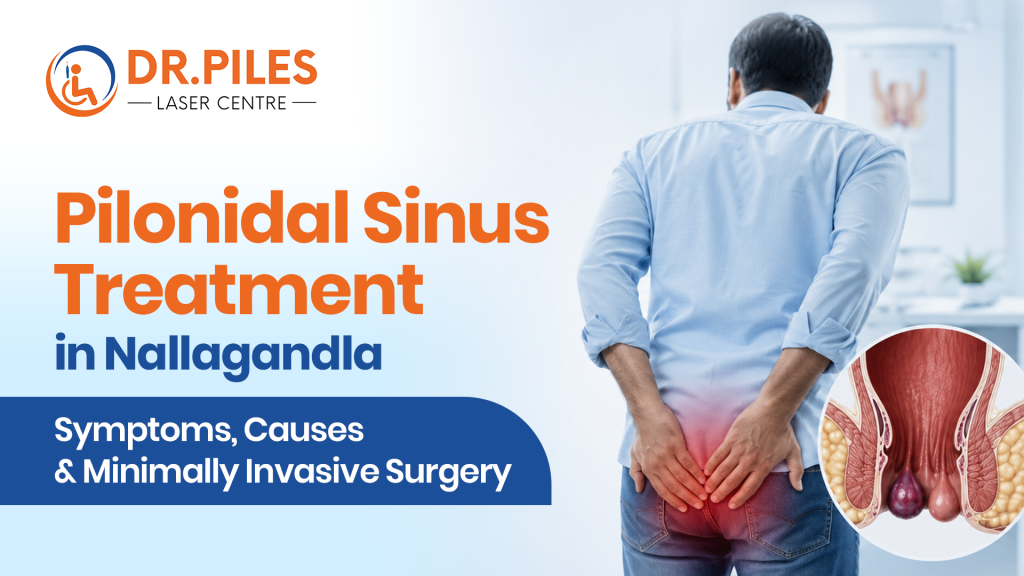
Have you noticed a painful swelling or recurring discharge near your tailbone? Does sitting for long hours make the pain worse? These symptoms could indicate a pilonidal sinus, a common condition that often affects young adults.
Many people mistake it for a simple boil and delay treatment until the infection becomes severe. The good news is that modern minimally invasive laser surgery offers a safe, effective, and quicker recovery compared to traditional surgery.
If you’re looking for Pilonidal Sinus Treatment in Nallagandla, understanding the condition and seeking timely treatment can help you avoid repeated infections and discomfort.
What Is a Pilonidal Sinus?
A pilonidal sinus is a small tunnel or cavity that develops in the skin near the top of the buttock crease, close to the tailbone (coccyx).
It usually contains:
- Hair
- Dead skin cells
- Dirt and debris
When this tunnel becomes infected, it fills with pus, leading to pain, swelling, and discharge.
Without proper treatment, the condition often keeps coming back.
Common Symptoms of Pilonidal Sinus
The symptoms vary depending on the severity of infection.
Early Symptoms
- Small pit or opening near the tailbone
- Mild discomfort while sitting
- Tenderness around the affected area
Advanced Symptoms
- Painful swelling
- Redness around the cyst
- Pus or blood discharge
- Bad-smelling drainage
- Fever (in severe infections)
- Difficulty sitting or walking comfortably
If you experience these symptoms repeatedly, consult a specialist immediately.
What Causes Pilonidal Sinus?
Although the exact cause isn’t always clear, several factors increase the risk.
Ingrown Hair
Loose hair can penetrate the skin, causing inflammation and infection.
Prolonged Sitting
People who sit for long hours, such as office employees, drivers, and students, have a higher risk.
Excess Body Hair
Thick or coarse body hair increases the chances of hair entering the skin.
Poor Hygiene
Sweating and dirt accumulation around the buttock area can contribute to infection.
Obesity
Excess body weight increases pressure and friction around the tailbone.
Family History
Some people inherit a tendency to develop pilonidal disease.
Who Is at Higher Risk?
You may be more likely to develop a pilonidal sinus if you:
- Are between 15 and 40 years old
- Spend long hours sitting
- Have excessive body hair
- Sweat excessively
- Are overweight
- Have experienced previous pilonidal infections
How Is Pilonidal Sinus Diagnosed?
Diagnosis is usually straightforward.
The doctor will:
- Review your symptoms
- Examine the affected area
- Look for sinus openings or abscesses
- Check for infection or discharge
In complicated or recurrent cases, imaging tests may be recommended to determine the extent of the sinus.
Treatment Options for Pilonidal Sinus
Treatment depends on the severity of the condition.
Medications
For mild infections, doctors may prescribe:
- Antibiotics
- Pain-relieving medications
However, medications alone rarely cure the sinus completely.
Incision and Drainage
If a painful abscess has formed, the pus is drained to relieve pain.
While this provides immediate relief, it may not prevent recurrence.
Minimally Invasive Laser Surgery
Modern laser surgery has become one of the preferred treatments for pilonidal sinus.
Benefits include:
- Smaller incision
- Less pain
- Minimal bleeding
- Lower risk of infection
- Faster recovery
- Short hospital stay
- Early return to work
- Better cosmetic outcome
- Reduced chances of recurrence
This procedure is especially suitable for patients seeking a quicker recovery with minimal discomfort.
Recovery After Pilonidal Sinus Surgery
Recovery is generally smooth with minimally invasive procedures.
Most patients can:
- Walk within a few hours
- Return home the same day
- Resume desk work in a few days
- Return to normal activities within a short period, as advised by the surgeon
Following post-operative care instructions helps ensure proper healing.
Tips to Prevent Pilonidal Sinus
Although not every case can be prevented, these habits reduce your risk:
- Maintain good hygiene
- Keep the area clean and dry
- Avoid prolonged sitting
- Maintain a healthy weight
- Remove excessive hair if advised
- Wear loose, comfortable clothing
- Exercise regularly
Why Choose Minimally Invasive Surgery?
Compared to traditional open surgery, minimally invasive laser treatment offers several advantages:
| Traditional Surgery | Minimally Invasive Laser Surgery |
| Larger wound | Small incision |
| More pain | Less pain |
| Longer healing time | Faster recovery |
| Longer hospital stay | Same-day discharge in many cases |
| Higher wound care needs | Minimal wound care |
| Delayed return to work | Early return to routine |
Frequently Asked Questions (FAQs)
1. Can a pilonidal sinus heal without surgery?
Small infections may temporarily improve with medication, but the sinus usually requires a procedure to prevent recurrence.
2. Is laser treatment painful?
Laser treatment is minimally invasive and generally causes less pain than traditional surgery.
3. How long does recovery take?
Many patients resume normal daily activities within a few days, depending on the extent of the procedure and the surgeon’s advice.
4. Can pilonidal sinus come back after treatment?
Recurrence is possible, but modern minimally invasive techniques combined with proper hygiene significantly reduce the risk.
5. Who is most likely to develop a pilonidal sinus?
Young adults, people who sit for long hours, those with excessive body hair, and individuals who are overweight are at higher risk.
6. Is pilonidal sinus a serious condition?
It is not usually life-threatening, but untreated infections can become painful, recurrent, and may require more extensive surgery.
Get Lasting Relief with Minimally Invasive Pilonidal Sinus Surgery
A pilonidal sinus may begin as a small, painless swelling, but delaying treatment can lead to repeated infections, abscess formation, and significant discomfort. Early diagnosis and timely treatment are essential to prevent complications and improve your quality of life.
If you’re experiencing persistent pain, swelling, or discharge near the tailbone, consult an experienced specialist for Pilonidal Sinus Treatment in Nallagandla. Modern minimally invasive laser surgery provides a safe, effective solution with less pain, faster healing, and a quicker return to your daily routine.
Book a consultation today. Call +91 9676479069
Visit our website: https://nexushospital.co.in/about